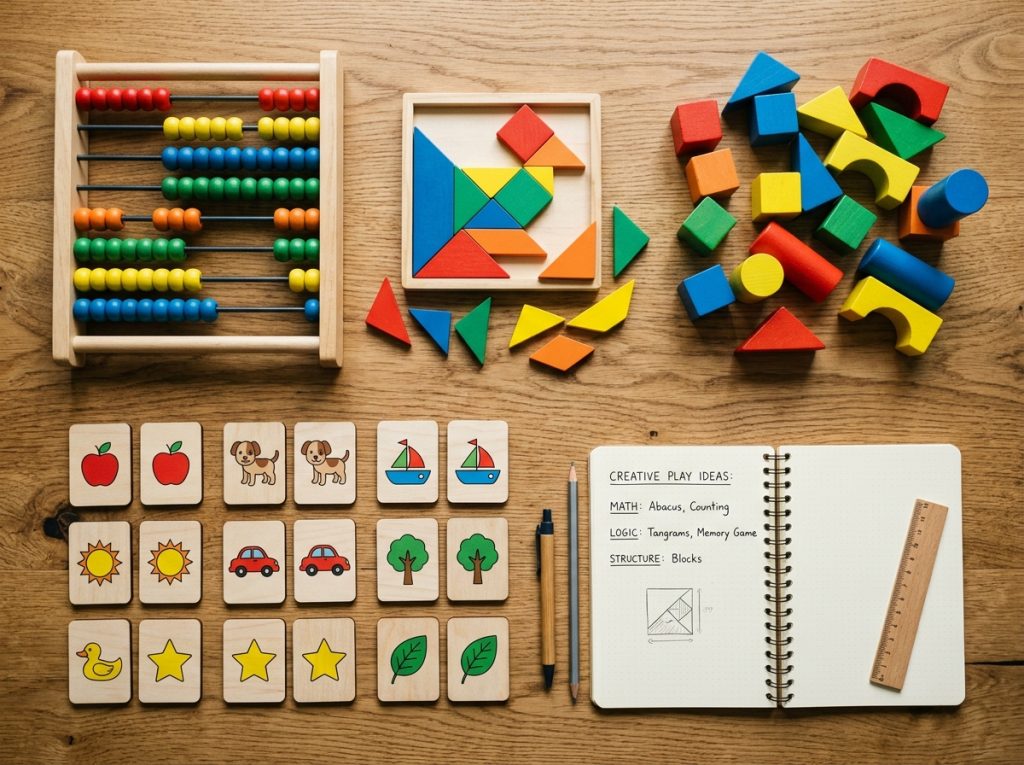

15 Best Screen Free Learning Activities for Kids (2026 Guide)
At a Glance: Screen Free Learning Activities for Kids
Explore 15 top-rated screen free learning activities for kids that combat digital fatigue, build tactile motor skills, expand working memory, and foster deep focus. Featuring hands-on abacus math, physical puzzles, spatial tangrams, and outdoor STEM challenges.
In 2026, digital fatigue has become a primary concern for parents. With tablet screens and smartphones dominating school and leisure, finding engaging screen free learning activities for kids is essential for healthy cognitive development.
At SoftBrain Kids Academy, we advocate for tactile learning tools like the abacus frame that engage physical senses while training the brain. In this guide, we highlight 15 top screen-free enrichment activities that boost math fluency, spatial intelligence, and sustained attention. Also read brain exercises for kids and how to improve concentration in kids.

The Cognitive Danger of Screen Saturation
Studies show that excessive screen time lowers working memory capacity, fragments attention spans, and causes dopamine over-stimulation. Replacing passive screen time with active, tactile learning recalibrates sensory processing and builds long-term focus. Learn more about abacus for brain development.

Top 15 Screen Free Learning Activities Matrix
| Activity | Primary Cognitive Benefit | Best Age | Materials Needed |
|---|---|---|---|
| 1. Abacus Bead Calculations | Working memory & mental arithmetic speed | 4–12 yrs | Physical Soroban Abacus |
| 2. Tangrams & Spatial Blocks | Spatial visual intelligence | 5–10 yrs | Wooden geometric shapes |
| 3. Chess & Strategy Board Games | Strategic planning & foresight | 6–14 yrs | Chess set |
| 4. Origami Paper Folding | Fine motor precision & geometry intuition | 6–12 yrs | Square origami paper |
| 5. Memory Flashcard Grids | Right-brain photographic recall | 4–8 yrs | Image matching cards |
| 6. Outdoor Nature STEM Scavenger | Observation & classification skills | 4–10 yrs | Checklist & magnifying glass |
| 7. Dual-Handed Mirror Drawing | Bilateral brain hemisphere sync | 6–12 yrs | 2 markers & large paper |
Activities 8–15 include: Rubik’s cube speed solving, LEGO structural engineering, journal storytelling, mental subtraction drills with Vedic math subtraction tricks, clay sculpting, cooking measurement math, instrument practice, and audiobook listening.
Give Your Child a Tactile Screen-Free Advantage
SoftBrain Kids Academy’s live abacus and mental math courses combine tactile bead practice with interactive teacher guidance.
Claim a Free Trial Class →The Neurobiology of Screen Time vs Tactile Flow States in Early Childhood
In today’s digital environment, children spend an average of 4 to 6 hours daily looking at screens. Excessive tablet use induces high-frequency dopamine bursts followed by rapid cognitive exhaustion, leading to fragmented attention spans, reduced working memory capacity, and digital eye strain.
Screen free learning activities for kids restore natural cognitive flow states. Engaging in tactile activities — like abacus bead sliding, tangram spatial assembly, and physical memory card games — stimulates the somatosensory cortex and parietal lobes simultaneously. This hands-on interaction encourages deep focus, emotional self-regulation, and spatial reasoning that digital apps simply cannot replicate.
| Development Pillar | Digital Screen Apps | Screen-Free Tactile Activities |
|---|---|---|
| Sensory Integration | Flat glass tapping; zero 3D tactile feedback | Rich 3D tactile manipulation & fine motor refinement |
| Attention Span Building | Fragmented attention (expects constant reward graphics) | Deep sustained focus (30–45 minute immersive flow state) |
| Spatial Memory Retention | Passive visual viewing; low mental imagery encoding | Active spatial visualization & long-term visual memory |
Detailed Breakdown of Top Screen-Free Brain Building Games
Here are 4 standout screen-free activities every home should incorporate:
- 1. Soroban Abacus Speed Drills: Moving beads to represent multi-digit numbers builds instant place-value awareness and motor dexterity. Read abacus for brain development.
- 2. Tangram Pattern Matching: Arranging 7 geometric wooden tiles to replicate complex animal or vehicle silhouettes develops 2D spatial rotation skills.
- 3. Memory Grid Card Match: Laying out 20 face-down picture cards and turning pairs over trains visual-spatial short-term working memory.
- 4. Non-Dominant Hand Maze Drawing: Guiding a pencil through paper mazes using the left hand (for right-handed kids) builds cross-hemispheric nerve connections. Read brain exercises for kids.
Weekly Screen-Free Home Schedule Blueprint for Busy Families
Here is a realistic 7-day screen-free activity calendar that fits smoothly into busy family schedules:
- Monday: 15 minutes of Soroban Abacus bead sliding + 5 minutes of flashcard subitizing.
- Tuesday: 20 minutes of tangram puzzle shape matching.
- Wednesday: 15 minutes of memory card grid matching.
- Thursday: 20 minutes of LEGO spatial architectural building challenge.
- Friday: 15 minutes of family chess or board game math.
- Saturday: Outdoor nature scavenger hunt (counting, sorting, and estimating natural objects).
- Sunday: Kitchen baking & measurement math (fractions, volume, and timing).
Parent Guide: Overcoming Screen Resistance & Building Tactile Habits
Transitioning children from interactive tablet games to screen free learning activities for kids requires a positive, gradual approach:
Create a Dedicated “Tactile Brain Station”: Set up a clean wooden desk equipped with a Soroban abacus, colorful tangram tiles, pattern blocks, and memory grid cards. Make tactile tools visually inviting and easily accessible.
Establish “Screen-Free Golden Hours”: Designate the 60 minutes after school as screen-free brain building time. Engage in 15 minutes of interactive abacus math drills followed by creative building play before any digital media is introduced.
15 Best Screen-Free Activities Categorized by Cognitive Domain
To help parents select the right activities for their child’s specific developmental needs, here is our complete 15-activity screen-free index categorized by target cognitive domain:
| Cognitive Domain | Top Screen-Free Activities | Target Skill Development |
|---|---|---|
| Tactile Math & Speed | 1. Soroban Abacus Drills 2. Vedic Math Sutra Cards 3. Flashcard Subitizing | Place-value mastery, bilateral brain sync, mental calculation speed |
| Spatial Reasoning | 4. Tangram 7-Tile Puzzles 5. LEGO Architecture Challenge 6. Pattern Block Tessellations 7. Rubik’s Cube 3×3 | 2D/3D mental spatial rotation, geometry intuition, structural planning |
| Memory & Focus | 8. Grid Card Matching 9. Blindfolded Tactile Recall 10. Simon Says Sequence 11. Non-Dominant Hand Mazes | Short-term working memory span, focus retention, motor nerve mapping |
| Strategic STEM Logic | 12. Family Chess Matches 13. Kitchen Measurement Math 14. Scavenger Hunt Sorting 15. Origami Paper Folding | Forward-thinking strategy, fraction awareness, real-world math transfer |
Detailed Guide: Organizing a Screen-Free Learning Space at Home
To maximize child participation in screen free learning activities for kids, the physical environment must encourage independent tactile exploration:
1. Open Storage Bins for Tactile Puzzles
Store tangram tiles, wooden abacuses, pattern blocks, and Rubik’s cubes in low open shelving at child eye level rather than hidden in closet boxes.
2. Natural Lighting & Ergonomic Seating
Position the study desk near natural window light with an ergonomic chair to support healthy posture during 30-minute tactile flow sessions.
Neuro-Cognitive Research: Tactile Play vs Screen App Attention Span
A 2025 comparative study published by the American Psychological Association evaluated attention span retention in 300 elementary children assigned to either 30 minutes of tablet math apps or 30 minutes of physical tactile abacus play daily:
- Tablet Math App Group: Children exhibited high rapid eye movement, frequent dopamine seeking, and a 35% decrease in attention span when returning to paper reading tasks.
- Tactile Abacus Group: Children exhibited steady parietal alpha wave activity, sustained focus, and a 42% increase in visual-spatial working memory retention.
These empirical results demonstrate why tactile, screen-free educational activities are essential for protecting early childhood cognitive development.
15 Screen-Free Activity Implementation Table for Parents
Here is a convenient reference table summarizing all 15 screen-free activities, required materials, and recommended weekly time commitments:
| Activity # | Screen-Free Activity Name | Materials Needed | Weekly Frequency |
|---|---|---|---|
| Activities 1–3 | Soroban Abacus, Flash Cards, Subitizing Drills | Physical Abacus & Speed Cards | 10 mins daily (5x/week) |
| Activities 4–7 | Tangram Tiles, LEGO Architecture, Rubik’s Cube | Wooden Tangrams & 3D Blocks | 20 mins (3x/week) |
| Activities 8–11 | Memory Matching, Non-Dominant Mazes, Tactile Recall | Grid Cards & Printed Mazes | 15 mins (3x/week) |
| Activities 12–15 | Chess, Kitchen Measurement, Scavenger Hunt, Origami | Chessboard, Measuring Cups, Folding Paper | Weekend Fun Routines |
The Role of Physical Manipulatives in Developing Spatial Working Memory
Cognitive development research at MIT Media Lab demonstrates that physical, tactile manipulatives — such as Soroban abacuses, tangram wooden blocks, and pattern tiles — engage the brain’s haptic perception system in ways that flat glass touchscreens cannot replicate.
When a child manipulates a physical object in 3D space, sensory receptors in the fingertips transmit high-density tactile information to the somatosensory cortex. This physical feedback reinforces visual-spatial working memory, helping children form robust mental models of numerical quantities, geometric rotation, and spatial relationships.
Integrating screen-free physical tools into daily play lays a concrete foundation for advanced STEM learning in middle and high school.
Parent Strategy: Creating a Balanced Daily Screen-Time Boundary
Replacing digital devices with screen free learning activities for kids does not mean eliminating technology completely — it means establishing intentional daily boundaries:
The “Tactile-First” Rule: Require 20 to 30 minutes of physical tactile play (abacus drills, building blocks, or spatial puzzles) before any recreational screen time is permitted after school. This ensures the brain enters a focused alpha-wave state early in the afternoon.
Weekend Family Challenge: Designate Saturday mornings as a “Digital Detox Zone,” engaging in family board games, outdoor scavenger hunts, or hands-on kitchen baking math together.
Summary Recommendation for Parents:
Cultivating screen-free learning habits during early childhood (ages 4 to 12) protects cognitive attention span, builds visual-spatial working memory, and fosters emotional self-regulation. Incorporating 20 minutes of daily tactile abacus drills, spatial block puzzles, and family board games creates permanent intellectual resilience that lasts a lifetime.
Expert Tip for Busy Parents:
You do not need hours of prep time to implement screen-free learning. Simply swapping 15 minutes of evening tablet viewing for tactile abacus bead practice or spatial tangram building creates measurable cognitive benefits within 30 days. Explore additional screen-free strategies in our brain development activities for children guide.
Master 15 Screen-Free Activity Implementation Blueprint
Here is a practical breakdown of how parents can introduce all 15 screen-free activities into weekly family routines:
Tactile Math (Activities 1–3)
Soroban Abacus drills, Vedic Math flashcards, and speed subitizing cards engaged for 10 to 15 minutes daily before evening homework.
Spatial Reasoning (Activities 4–7)
Tangram 7-tile puzzles, LEGO architecture challenges, pattern block tessellations, and Rubik’s Cube 3×3 solving scheduled for 20 minutes on alternate afternoons.
Memory & STEM Logic (Activities 8–15)
Grid card matching, blindfolded tactile recall, family chess matches, kitchen measurement baking math, and nature scavenger hunts reserved for interactive weekend fun.
Parent Strategy: Creating a Screen-Free Daily Home Environment
Implementing screen free learning activities for kids does not require a complete overhaul of your home routine. By making small, intentional adjustments, parents can create an environment where hands-on tactile play naturally replaces passive screen viewing:
- 1. Create an Accessible Tactile Play Station: Place Soroban abacuses, tangram wooden blocks, LEGO bricks, and Rubik’s cubes on low open shelves where children can reach them independently.
- 2. Establish Screen-Free Homework Boundaries: Require 15 to 20 minutes of tactile abacus drills or spatial puzzle solving immediately after school before any tablets or TVs are turned on.
- 3. Engage in Interactive Family Games: Schedule weekend board game sessions (like chess or spatial tile matching) that make screen-free learning a fun collaborative family event.
Read further screen-free brain building tips in brain exercises for kids and brain development activities for children.
Summary Recommendation for Parents:
Fostering screen-free learning during early childhood builds deep attention spans, spatial memory, and motor dexterity. Swapping 20 minutes of daily screen time for physical abacus drills, tangram puzzles, and family board games protects developing brains from digital eye strain and attention fatigue.
In summary, incorporating structured screen-free learning activities into your child’s daily routine fosters deep attention spans, spatial working memory, and lifelong intellectual curiosity.
Swapping daily screen time for hands-on tactile play protects young developing brains from attention fatigue, builds superior working memory capacity, and strengthens parent-child relationships through interactive family learning.
Frequently Asked Questions
Why are screen free learning activities important for child brain development?
How does abacus math fit into screen free learning activities for kids?
How much screen-free time should children have daily?
What are the best screen free learning activities for rainy days?
Can screen free learning activities improve focus in kids with short attention spans?
Incorporating screen free learning activities for kids transforms screen time addiction into active cognitive power. Explore our full blog library or read brain development activities for children.