Online Focus Classes for Kids: How to Choose (2026)
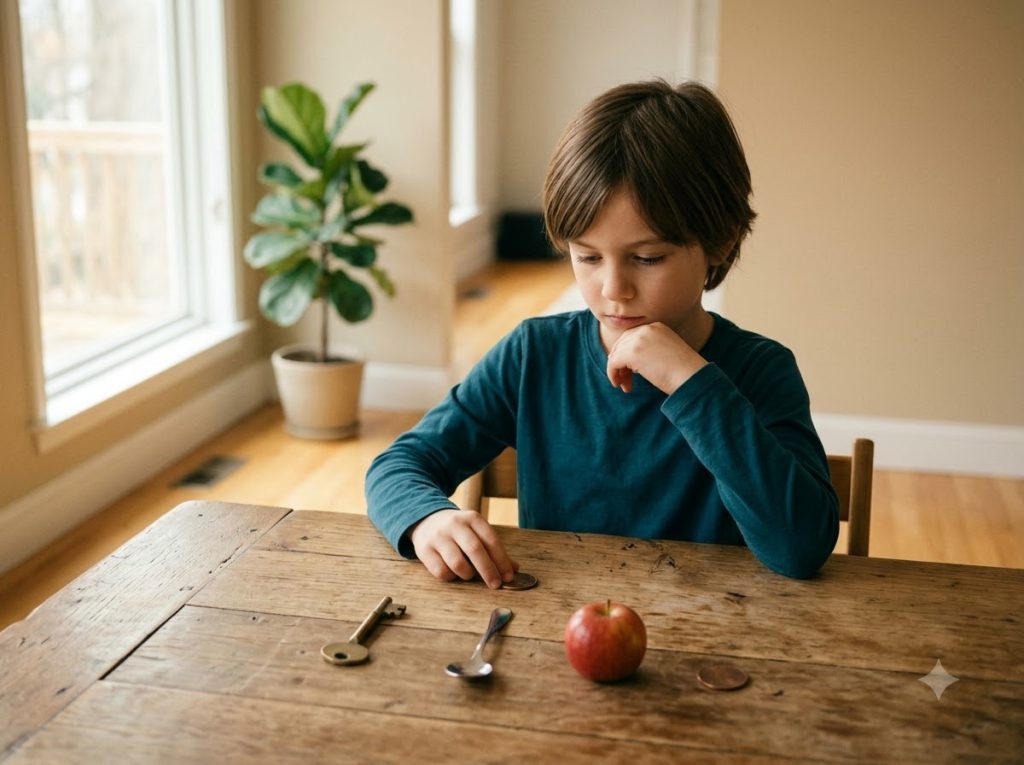

Quick answer: Online focus classes for kids are live or self-paced programs that train a child’s attention, concentration and memory through structured games and exercises. The most effective ones are live, coach-guided, age-appropriate, and screen-free — and they measure a child’s progress at the start and end so you can see real improvement. Apps can help casually, but live programs with a real coach build focus faster because attention is a skill that improves with guided daily practice.
If bedtime, homework or “sit still and finish it” has become a nightly negotiation, you’re not alone — and you’ve probably typed some version of “online focus classes for kids” into Google. The good news: focus isn’t a fixed trait your child either has or doesn’t. It’s a trainable skill. This guide breaks down what online focus classes actually are, which type genuinely works, what to look for, what they cost, and how to choose the right one for your child.
What are online focus classes for kids?
Online focus classes for kids are structured sessions — delivered over the internet — that help children strengthen attention, concentration, working memory and self-control. Instead of teaching a school subject like math or reading, they train the underlying cognitive skills that make every subject easier: the ability to pay attention, hold information in mind, resist distraction and stay calm.
They usually take one of three forms: a brain-training app your child plays alone, a live online class led by a teacher or coach, or a structured multi-day program that follows the same routine each day and tracks progress. We compare all three below.
Do online focus classes actually work?
Yes — with an important caveat: consistency and coaching matter more than the platform. Attention behaves like a muscle. Pediatric and education experts widely agree that concentration can be strengthened through regular, age-appropriate practice — short, repeated exercises that ask a child to focus a little longer each time (see general guidance from PBS KIDS for Parents and the American Academy of Pediatrics).
Where results fall apart is follow-through. A focus app used twice and forgotten does little. A program a child does every day for two to three weeks, guided by a coach who keeps them accountable and adjusts to their level, is where parents actually see change — in homework, in listening, and in how calmly their child moves through the day.
Note: focus classes are an enrichment activity, not a medical treatment. They are not a diagnosis or a substitute for professional advice. If you’re worried about your child’s attention, speak with your pediatrician.
The 3 types of online focus classes (compared)
Not all “focus classes” are the same. Here’s how the three main options stack up:
| Type | How it works | Best for | Limitation |
|---|---|---|---|
| Brain-training apps | Child plays focus/memory games solo on a screen | Casual, low-cost practice | More screen time; no accountability; kids drift off |
| Live online classes | A teacher leads a group session in real time | Interaction and structure | Often generic; may not measure progress |
| Structured focus programs | Same daily routine for a set number of days, coach-guided, with a start/end assessment | Real, measurable improvement | Requires daily commitment |
If your goal is a visible change in your child’s focus — not just another app they’ll abandon — a structured, coach-guided program is the type that delivers. For related at-home ideas, see our guide to brain exercises for kids and screen-free learning activities.
What to look for in the best online focus class
Use this checklist to separate a genuinely effective program from a repackaged app:
- Live coaching, not just videos. A real coach who guides, corrects and encourages keeps kids engaged and accountable.
- Screen-free activities. The best programs use the device only as a window in — the exercises themselves (memory games, movement, breathing) happen off-screen, so you reduce screen time instead of adding to it.
- Age-appropriate and scaled. A 6-year-old and a 12-year-old need different challenges. Look for activities that adjust by age and start from your child’s own baseline.
- Measured progress. The program should assess your child at the start and again at the end across concrete skills (memory, concentration, coordination) so you can see the change on paper.
- Small groups or personalised attention. Focus is hard to build in a crowd of 30.
- A clear daily routine. Predictable structure helps children settle and focus a little more each day.
- A guarantee. A money-back guarantee signals the provider stands behind the outcome.
Looking for a focus class that ticks every box?
SoftBrain’s live, 100% screen-free 15-Day Brain & Focus Workshop scores your child on Day 1 and Day 15 — so you see the difference on paper.
See the 15-Day Workshop →Signs your child would benefit from a focus class
Online focus classes for kids tend to help most when a child:
- Turns 20-minute homework into a two-hour battle
- Can’t sit still or finish tasks they start
- Needs instructions repeated five times before they stick
- Melts down or gets restless the moment screens go away
- Is bright and curious but “scattered,” losing marks to attention rather than ability
If several of those sound familiar, structured focus practice can help. You may also find our guides on how to improve concentration in kids and how to improve memory in kids useful.
How much do online focus classes cost?
Pricing varies widely by format:
- Apps: roughly $5–$15 per month (self-paced, no coach).
- Per-session live classes: often $15–$40 per class on marketplaces.
- Structured multi-day programs: typically $100–$300 for a full guided program with assessments and a certificate.
A structured program often works out to less than a month of typical after-school tutoring — for a complete, measurable focus reset rather than an open-ended subscription.
A screen-free option that checks every box
If you want the “structured program” type — live, screen-free, age-scaled and measured — the SoftBrain 15-Day Brain & Focus Workshop was built exactly around the checklist above. It’s a live, coach-guided daily routine of screen-free games — memory tables, brain-gym coordination drills, focus challenges, and calm breathing — for children aged 4–16, about 60–75 minutes a day for 15 days.
Every child is scored on Day 1 and Day 15 across memory, concentration, coordination, balance and sensory recognition, so you receive a simple progress sheet and a completion certificate. SoftBrain has run structured, screen-free brain-training for children in 40+ countries since 2014, with a 4.9★ Google rating, and the workshop is backed by a 14-day money-back guarantee.
Give your child 15 screen-free days of real focus practice
Live coach · Ages 4–16 · Measured Day-1 to Day-15 · 14-day money-back guarantee.
Reserve your child’s seat →Frequently asked questions
Do online focus classes for kids really work?
They can, when practice is consistent and guided. Attention is a trainable skill; short, repeated, age-appropriate exercises done daily — ideally with a coach for accountability — produce the best results. One-off app use rarely does.
What age are online focus classes for?
Most programs serve children roughly 4–16, with activities scaled by age. Younger children work in shorter bursts; older children take on harder challenges. Choose a class that adjusts to your child’s level.
Are focus classes the same as ADHD treatment?
No. Focus classes are an educational enrichment activity, not a medical or clinical treatment, and they do not diagnose or cure any condition. If you have concerns about your child’s attention, talk to your pediatrician.
Are screen-free focus classes better?
For many families, yes — a screen-free program reduces overall screen time while still building attention through physical and mental games, rather than adding another app to your child’s day.
How quickly will I see results?
Many parents notice small changes — calmer transitions, fewer homework fights — within the first week of a daily program, with clearer, measured gains by the end. Results vary by child, age and consistency.
Bottom line: the best online focus classes for kids are live, screen-free, age-appropriate and measured. If that’s what you’re after, take a closer look at the 15-Day Brain & Focus Workshop — 15 screen-free days, a live coach, and progress you can see on paper.
Have questions about our programs or enrollment?
Get in touch directly with our child developmental counselors. We offer 24/7 Customer Support to guide your family's educational path.