
Abacus vs Calculator for Kids: Which Is Better for Brain Growth? (2026)
At a Glance: Abacus vs Calculator for Kids
Compare abacus vs calculator for kids to understand why tactile bead manipulation builds working memory and mental arithmetic while early calculator use leads to digital reliance. Learn when each tool is appropriate in your child’s education based on 2025–2026 neuro-cognitive studies.
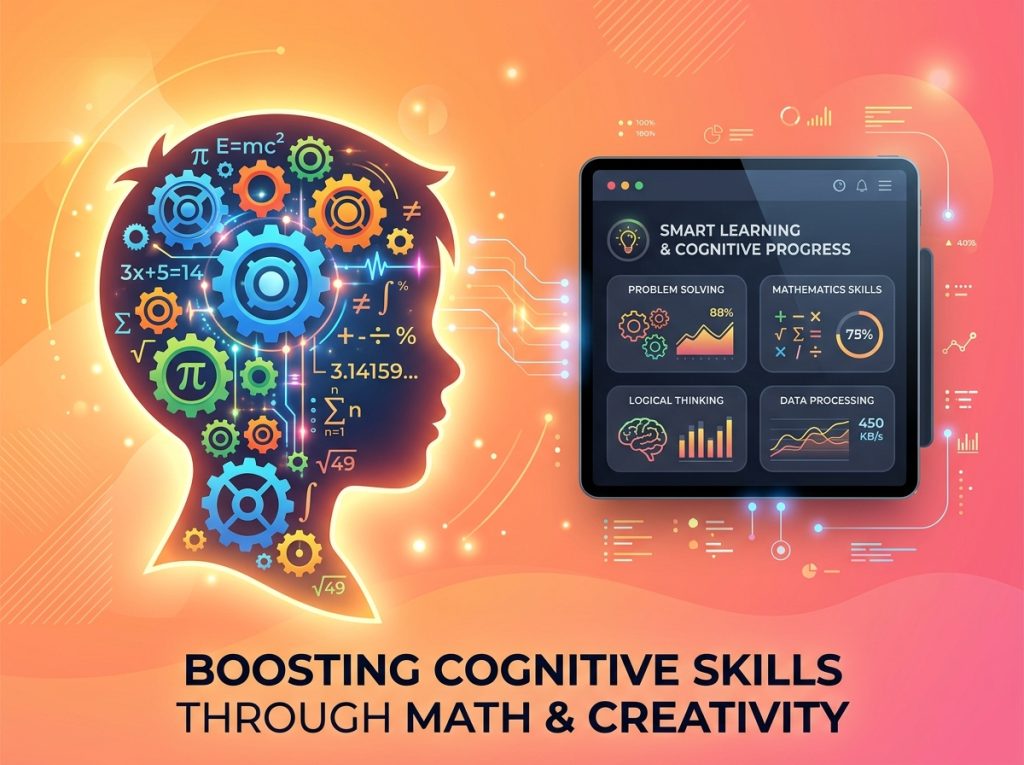
In an era dominated by smartphones, smartwatches, and AI math apps, parents frequently ask: “Why should my child learn the abacus when they have a calculator in their pocket?” The debate between abacus vs calculator for kids comes down to a crucial distinction: passive computation versus active brain development.
At SoftBrain Kids Academy, we view the abacus as a “brain gym” that builds neural connections, while the calculator is simply an external shortcut. In this 2026 comparative analysis, we examine cognitive impact, working memory gains, calculation speed, and long-term academic confidence. Also explore benefits of abacus for kids and abacus vs Kumon vs Mathnasium.

1. Core Difference: Cognitive Gym vs. External Crutch
The fundamental distinction in abacus vs calculator for kids lies in where the computation happens. When a child uses a calculator, the device performs 100% of the mental heavy lifting. The child merely presses buttons and reads the display — a passive action that creates zero new synaptic connections.
Conversely, an abacus forces the child’s brain to translate abstract numbers into tangible visual-spatial bead positions. As they progress to mental abacus, they hold a high-speed virtual abacus in their mind, building working memory and concentration. For related insights, read how abacus works step by step and is abacus useful for school math.
2. Detailed Feature Comparison Table
| Feature / Dimension | Abacus Training | Electronic Calculator | Winner for Elementary Kids |
|---|---|---|---|
| Brain Hemisphere Use | Bilateral (Left logic + Right spatial visualization) | Minimal left-brain button motor control | 🧮 Abacus |
| Working Memory Growth | High — holds 4-6 bead digits mentally | Zero — offloads memory to screen | 🧮 Abacus |
| Number Sense & Intuition | Deep conceptual understanding of base-10 | Superficial — treats numbers as abstract symbols | 🧮 Abacus |
| Exam Readiness (No-Calc Tests) | 100% prepared for non-calculator exam sections | Helpless when calculators are banned | 🧮 Abacus |
| Complex High-Level Math | Arithmetic, square roots, percentages | Advanced calculus, graphing, matrices | 📱 Calculator (Ages 14+) |

3. Neurological Impact: 2025–2026 Research Findings
A 2025 neuro-cognitive study published in PLOS One demonstrated significant improvements in visuospatial working memory among children who underwent abacus-based mental calculation (AMC) training compared to control groups. Neuroimaging (fMRI) shows increased gray matter density in spatial reasoning regions.
Conversely, early calculator dependence offloads working memory to a digital screen. Check out math anxiety in kids and mental math for kids.
Build a Human Calculator Brain
Don’t let your child become reliant on screens for basic math. Enroll in SoftBrain Kids Academy’s live abacus and mental math classes today.
Claim Your Free Trial →4. Speed Benchmark Table: Mental Abacus vs. Electronic Calculator
| Calculation Task | Mental Abacus Trained Student | Electronic Calculator User | Speed Winner |
|---|---|---|---|
| 10-Number Addition Chain (e.g. 45+89+12…) | 3.5 seconds mentally | 8.5 seconds (keyentry latency) | ⚡ Mental Abacus |
| 3-Digit x 2-Digit Multiplication | 4.0 seconds mentally | 5.0 seconds | ⚡ Mental Abacus |
| Graphing Trigonometry Functions | Not applicable | Instant visual plot | 📱 Calculator |
5. When to Introduce Each Tool in Your Child’s Journey
- Ages 4–12 (Foundation): Use Abacus & Mental Math exclusively. Build number sense, place value, and high working memory. See best age to learn abacus.
- Ages 10–14 (Enrichment): Combine Mental Abacus with Vedic math tricks for algebraic problem solving.
- Ages 13+ (High School STEM): Introduce scientific graphing calculators for trigonometry, calculus, and data science.
6. Frequently Asked Questions
Why is abacus better than a calculator for young kids?
Can an abacus user calculate faster than a calculator user?
At what age should kids move from abacus to calculators?
Does calculator reliance cause math anxiety?
How do calculators affect working memory compared to abacus?
Choosing abacus training over early calculators gives your child a cognitive foundation that lasts a lifetime. Explore our full blog library or compare abacus vs Vedic math for kids.