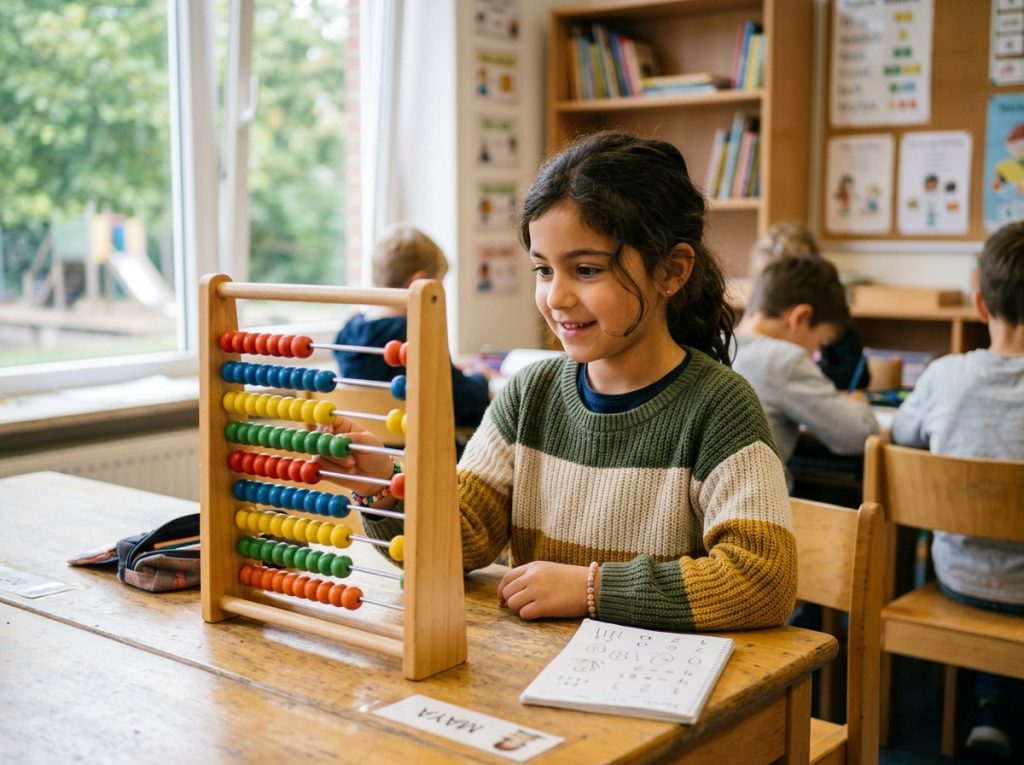

Abacus for Kids with ADHD: Multisensory Benefits & Focus Training (2026)
At a Glance: Abacus for Kids with ADHD
Explore 2025–2026 research on abacus for kids with ADHD. Discover how tactile bead manipulation, structured visual sequences, and bilateral sensory engagement channel restlessness into laser focus, building working memory and executive function in neurodivergent learners.
Parents of neurodivergent children often search for non-pharmacological educational tools that help manage attention challenges. Abacus for kids with ADHD has emerged in 2026 as one of the most effective multisensory cognitive interventions for building sustained attention and working memory.
At SoftBrain Kids Academy, we design inclusive learning environments where children with diverse learning needs thrive. In this evidence-based guide, we examine neuroscientific research on how the soroban abacus improves executive function in children with ADHD. Also read how to improve concentration in kids and math anxiety in kids.

1. Why Traditional Math Fails ADHD Learners
Standard elementary mathematics relies heavily on static worksheets, abstract symbols, and repetitive pencil drills. For a child with Attention Deficit Hyperactivity Disorder (ADHD), this passive format causes rapid cognitive fatigue and frustration.
ADHD is fundamentally a challenge of executive function — specifically working memory, response inhibition, and sustained attention. When forced to sit quietly and process abstract digits, the ADHD brain lacks the sensory stimulation required to maintain dopamine engagement. Read abacus for brain development to see how multisensory tools address this gap.
2. The 4 Neuro-Mechanisms of Abacus Focus Training
Abacus training works remarkably well for neurodivergent children due to 4 core neurological mechanisms:
- Tactile Kinesthetic Feedback: Sliding physical beads engages motor nerves, converting fidgeting energy into purposeful mathematical manipulation.
- Concrete to Abstract Transition: Numbers are represented as tangible bead patterns, reducing abstract cognitive load. Check how abacus works step by step.
- Rhythmic Micro-Steps: Abacus operations break complex arithmetic into short, rhythmic 1-second bead moves that provide constant micro-rewards.
- Bilateral Brain Stimulation: Using both hands to move beads activates both left and right hemispheres, reinforcing the corpus callosum. Learn about right brain training for kids.

3. Research Findings: Executive Function & ADHD (2025 Studies)
Research published in 2025 confirms that systematic multisensory abacus training acts as a catalyst for neuroplasticity in children with ADHD. It specifically targets visuospatial working memory and executive inhibition, reducing task abandonment and math-related anxiety.
4. Abacus vs. Traditional Worksheet Support Comparison
| Learning Dimension | Abacus Mental Math | Traditional Paper Worksheets | Impact on ADHD Learner |
|---|---|---|---|
| Sensory Engagement | High (Tactile, Visual, Auditory bead sound) | Low (Static pencil on paper) | Sustains Attention longer |
| Working Memory Load | Supported by spatial bead layout | High abstract carry-over demand | Reduces memory dropouts |
| Feedback Velocity | Instant visual verification of bead frame | Delayed until teacher grading | Instant dopamine feedback loop |
| Frustration / Anxiety | Low — errors reset instantly with a swipe | High — messy erasures & stress | Prevents math meltdown |
Support Your Neurodivergent Learner
Our patient, trained instructors offer small-group online abacus classes designed to help kids with ADHD build focus, confidence, and math fluency.
Book a Free Trial Session →5. Parenting Strategies for ADHD Abacus Practice at Home
- Use 10-Minute Micro-Sessions: Two 10-minute sessions per day are far more effective for ADHD learners than one 30-minute block.
- Combine with Physical Movement: Let the child stand or use a wobble stool while operating the abacus frame.
- Gamify Speed Drills: Set a timer for 60 seconds and celebrate how many bead problems they solve, focusing on personal bests. Read how to improve math speed for kids.
- Praise Effort over Accuracy: Reinforce sustained concentration and recovery from mistakes to build resilience.
6. Frequently Asked Questions
How does abacus training help kids with ADHD?
Is abacus training a substitute for ADHD medical treatment?
What makes abacus better for ADHD than traditional worksheet math?
What is the best age to start abacus for a child with ADHD?
How do instructors adapt abacus lessons for children with ADHD?
Exploring abacus for kids with ADHD opens doors to academic confidence and cognitive control. Explore our full blog library or read brain exercises for kids.