
Abacus vs Kumon: Which Math Program Is Better for Kids? (2026)
At a Glance: Abacus vs Kumon
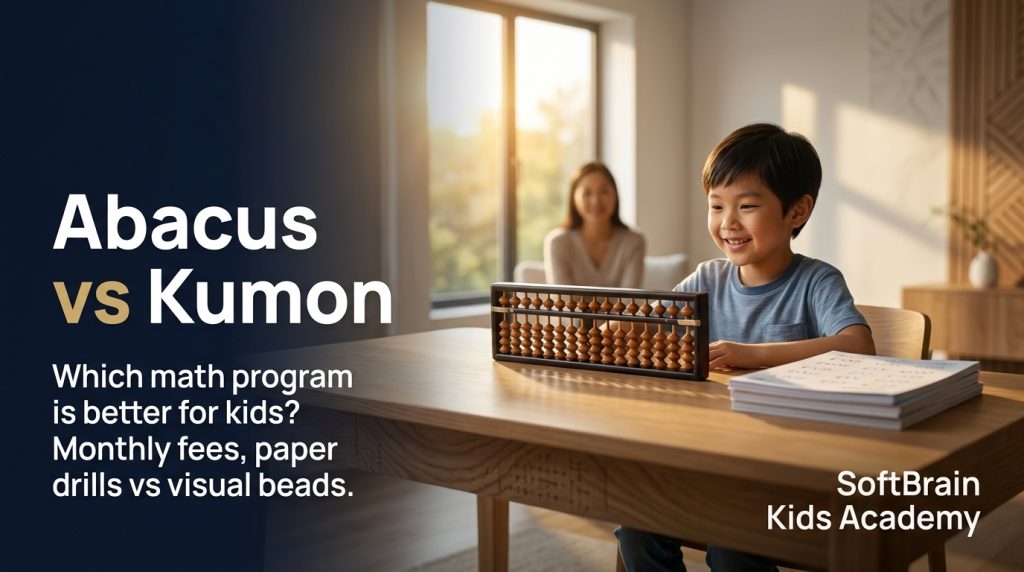
When evaluating abacus vs kumon, parents face a choice between tactile right-brain bead visualization and repetitive paper worksheet drills. Abacus builds visual mental arithmetic (Anzan) and eliminates math anxiety, whereas Kumon focuses on repetitive paper practice and speed memorization.
When parents look for extra math support to boost their child’s confidence, two names consistently top the list: Abacus training and Kumon Math. Deciding between abacus vs kumon requires comparing learning philosophies, monthly tuition costs, daily workload, and long-term cognitive impact.
At SoftBrain Kids Academy, our live 1-on-1 online abacus program provides a modern, engaging alternative to traditional paper-heavy franchises. In this 2026 comparison guide, we analyze both programs across 8 key dimensions, break down pricing, and help you choose the best fit for your child.

1. Learning Philosophy: Visual Beads vs. Paper Drills
The core debate in abacus vs kumon centers on how children internalize mathematical concepts. Read our introductory guide on benefits of abacus for kids.
Abacus Math: Children manipulate physical beads on a Soroban frame, converting abstract numbers into concrete, movable objects. Over time, students project a virtual abacus in their mind (Anzan), achieving rapid mental calculation without paper scratchwork. Read abacus for brain development and how abacus works step by step.
Kumon Math: Kumon relies on self-learning through repetitive paper worksheets. Students complete daily timed pages (10-20 pages per day) to build speed through repetition. While effective for memorization, it can cause frustration and burnout in kids who dislike repetitive paperwork.
2. Abacus vs. Kumon Master Comparison Table
| Feature | SoftBrain Live 1-on-1 Abacus | Kumon Math Center |
|---|---|---|
| Teaching Format | Live 1-on-1 Certified Tutor | Self-study worksheets with proctors |
| Monthly Tuition | $79 – $139 / month | $150 – $200 / month |
| Registration & Materials | $0 (All included) | $50–$80 initial registration |
| Daily Commitment | 10–15 mins practice | 30–45 mins heavy paperwork |
| Math Anxiety Impact | Eliminates anxiety via fun visual beads | Can increase stress due to timed drills |
3. Tuition Cost & Fee Breakdown
Review full tuition guides in abacus class fees and course duration and online abacus classes for kids.
4. Daily Homework Workload & Burnout Risk
Kumon requires parents to grade daily paper packets at home, which often creates friction between parents and children. Abacus training at SoftBrain uses interactive digital portals with automated scoring, reducing parent workload to zero. Read about math anxiety in kids.
Switch from Kumon to SoftBrain Live 1-on-1 Abacus
Tired of daily paper drill battles? Give your child the joy of visual mental math with certified private tutors.
Book a Free Demo Class →5. Right-Brain vs. Left-Brain Stimulation
Research from Harvard University Center on the Developing Child shows visual abacus training activates right-brain spatial memory. Compare with right brain training for kids and Abacus vs Vedic Math for kids.
6. 3-Way Comparison: Abacus vs. Kumon vs. Mathnasium
Read our detailed 3-way analysis in Abacus vs Kumon vs Mathnasium and is abacus useful for school math.
Claim Your Child’s Free 1-on-1 Trial Class
Experience SoftBrain’s live 1-on-1 online abacus tutoring. Book your free trial class today!
Try a Free Demo Class →